

How to Show Trademark Use for Clothing Brands: Acceptable Specimen Examples

Launching a clothing brand is exciting, and filing a federal trademark application can feel like a major milestone. However, many entrepreneurs quickly discover that understanding trademark use for clothing brands is more complex than expected. Under U.S. trademark law, not every logo placement or social media post qualifies as legally sufficient use. For apparel businesses, the United States Patent and Trademark Office (USPTO) requires specific types of evidence, known as specimens, to prove that a trademark is genuinely used in commerce. Misunderstanding these requirements can lead to office actions, delays, or even refusal of the application.
They misunderstand what legally qualifies as “use in commerce.”
Under U.S. trademark law, not every logo placement counts. Not every Instagram post qualifies. Not every website screenshot will satisfy the United States Patent and Trademark Office (USPTO).
For clothing brands, trademark specimen requirements are highly specific, and mistakes can lead to office actions, delays, audits, or even cancellation.
This comprehensive guide explains:
- What qualifies as trademark use for apparel
- Acceptable specimens for clothing brands
- Why logos printed on shirts alone may not be enough
- Online retail listing requirements
- Common mistakes in apparel filings
- Evidence that triggers refusals
- Best practices before filing
If you have not reviewed the broader legal framework yet, you may want to read our foundational guide: [What Qualifies as Trademark Use in Commerce? Real Specimen Examples by Industry]
What Qualifies as Trademark Use for Apparel Products?
Under USPTO rules, trademark use for goods (including clothing) requires:
- The mark must appear on the goods, packaging, labels, or displays associated with the goods.
- The goods must be sold or transported in interstate commerce.
- The use must be bona fide in the ordinary course of trade.
For Clothing, This Means:
The trademark must function as a source identifier, not merely decorative artwork.
That distinction is critical.
If consumers view the mark as a brand (like NIKE or SUPREME), it qualifies.
If they view it as decorative messaging (“Beach Vibes” across the chest), it likely does not.
Key Legal Concept: Ornamental Refusal
Clothing trademarks often face ornamental refusals when:
- The mark appears large across the front of a shirt
- It looks like a slogan or design rather than a brand
- It is not placed in a traditional branding location
The USPTO examines whether the mark appears where consumers expect brand indicators, such as:
- Neck labels
- Hang tags
- Sewn-in tags
- Packaging labels
Some real-life examples –
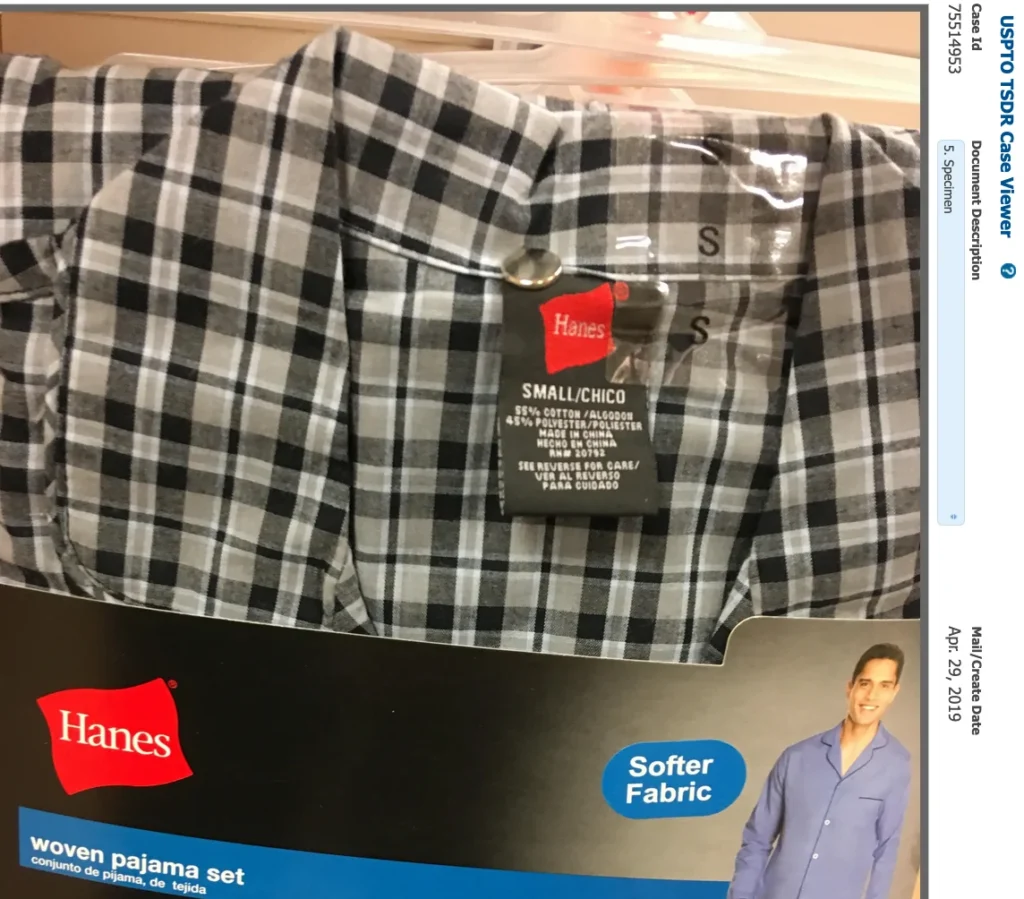
- The HANES trademark portfolio also uses tags and packaging. The image below shows the use of the trademark HANES on both the packaging and as a tag.
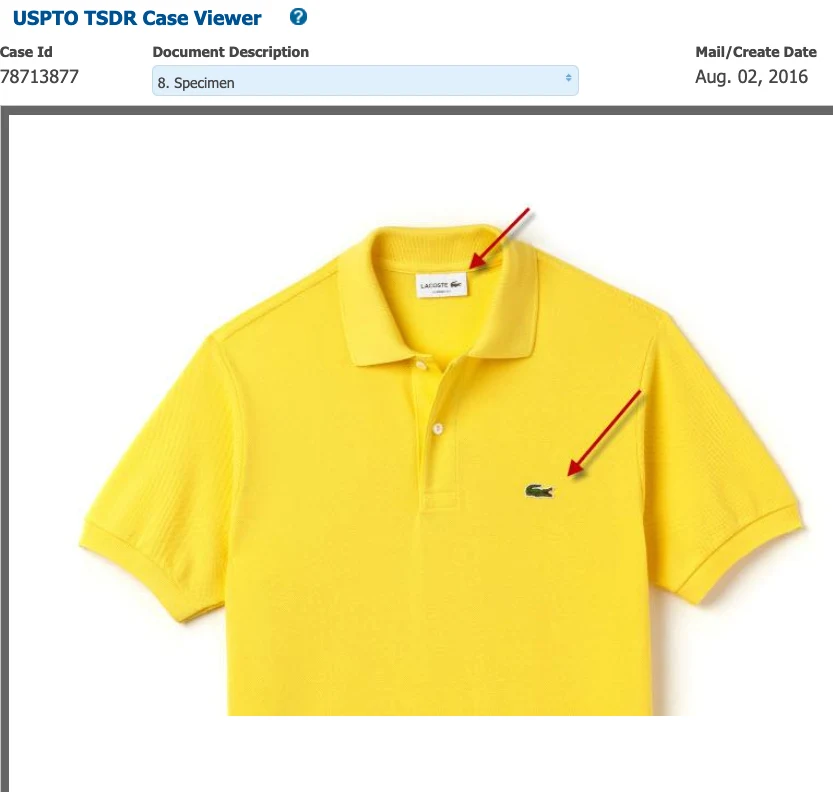
Under specific circumstances, the USPTO may accept evidence of use that appears on the front of a shirt. The classic example is the Lacoste crocodile.
For a deeper explanation of the legal framework behind use requirements, review: [Legal Definition of Trademark Use in Commerce]
Acceptable Specimens for Clothing Brands
When filing a use-based application (or Statement of Use), you must submit a specimen showing real-world trademark use.
Here are acceptable specimens for apparel products:
Nationwide Protection
This is the strongest specimen type.
A photo showing:
- The mark is clearly printed or stitched inside the garment
- Attached to the clothing item
- In a traditional brand placement location
This demonstrates the mark functions as a brand, not decoration.
Hang Tags Attached to Clothing
A hang tag qualifies if:
- It is physically attached to the garment
- The mark is clearly visible
- The tag appears as part of the actual product distribution
Important: The tag must be shown attached to the item and not a digital mockup.
Packaging with the Mark
For example:
- Branded polybags
- Branded boxes
- Clothing packaging sleeves
The specimen must show:
- The packaging
- The mark was clearly displayed
- The packaging used in actual sales
Online Retail Listings (Point-of-Sale Displays)
Online listings can qualify, but they must meet specific requirements.
The webpage must show:
- The trademark is clearly displayed near the product
- A picture of the clothing item
- A purchasing option (Add to Cart, Buy Now, Price shown)
- The URL and access date (in the screenshot)
Many applicants miss these elements.
For broader specimen standards across industries, review: [Overview of Specimen Requirements for Goods vs. Services]
Why Logos Printed on Shirts Alone May Not Be Enough
This is one of the most common mistakes in apparel filings.
Large Decorative Placement = Potential Refusal
If the trademark appears:
- Across the front of a shirt
- As the main artistic feature
- In oversized decorative format
The USPTO may issue an ornamental refusal.
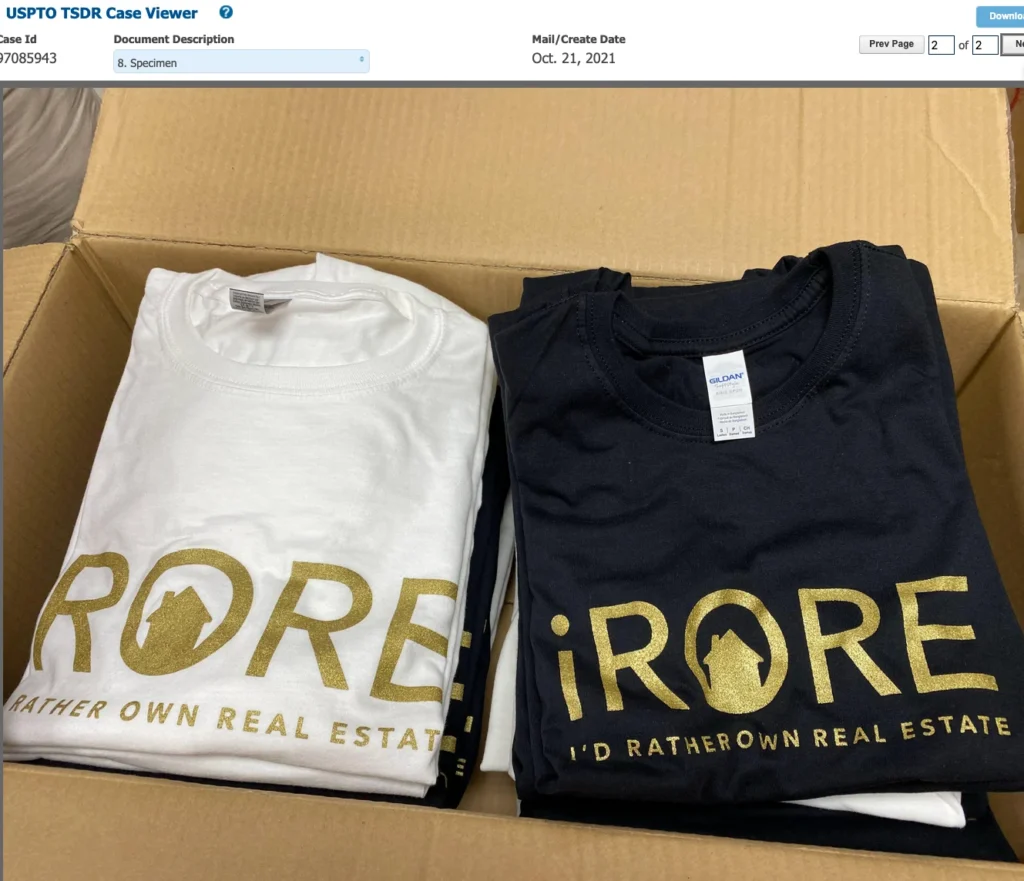
Why? A trademark is a source-identifier. A graphic image on the front of a shirt is viewed as decoration, not a brand. For example, the specimen shown below was submitted as evidence of use in a trademark application for iROAR I’D RATHER OWN REAL ESTATE. The USPTO refused registration because the applied-for mark, as shown on the specimen is ornamental. This is correct. The tags on the t-shirts show that the source of the goods is GILDAN. These are GILDAN t-shirts with an ornamental feature on the front.
Large Decorative Placement = Potential Refusal
Contrast Example
Decorative Example (Refusal Likely):
- “URBAN WAVE” in large stylised letters across the chest.
Acceptable Branding Example:
- “URBAN WAVE” on a small neck label or hang tag.
The key question: Would consumers recognise this as the brand, or just artwork?
If you are unsure, consulting experienced counsel before filing can prevent costly delays. [When Businesses Should Consult a Trademark Attorney]
Online Retail Listings & Point-of-Sale Display Requirements
E-commerce is common for clothing brands, but digital specimens must meet strict criteria.
Valid Online Specimen Must Include:
- The trademark is displayed clearly
- The product image
- Purchasing information (price or cart button)
- The URL
- Date accessed or printed
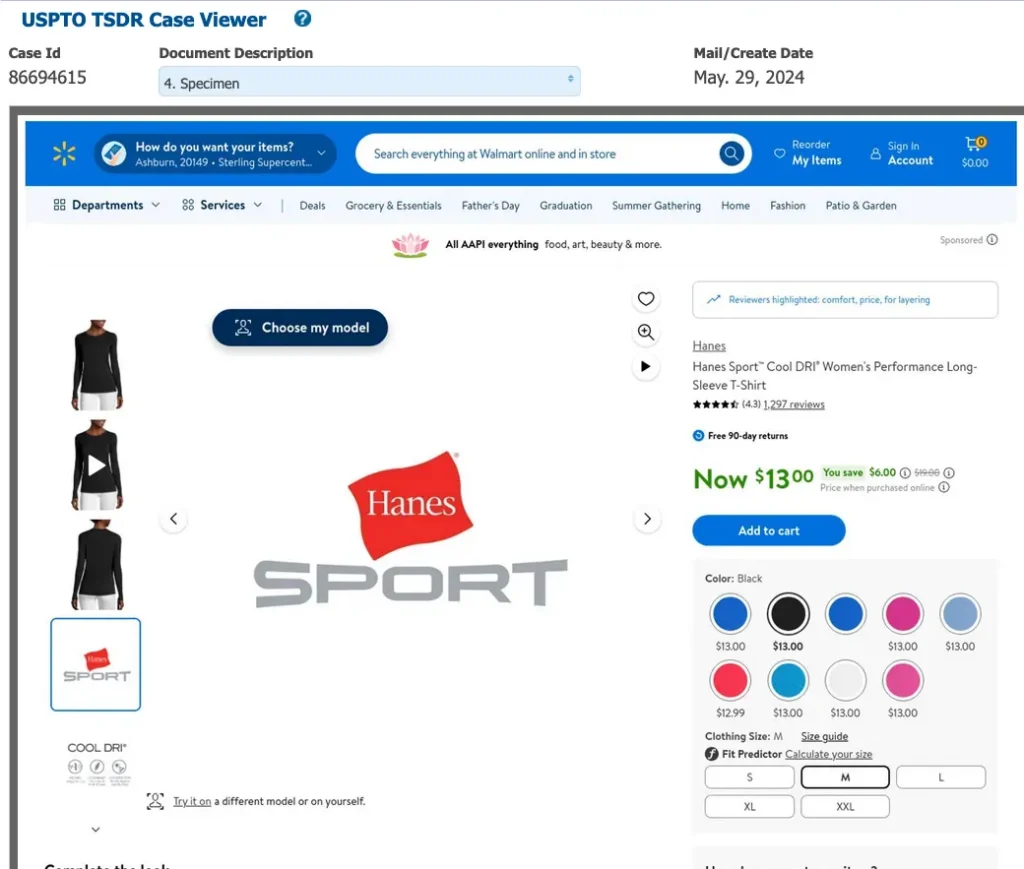
The image below shows how a website screenshot may be an acceptable specimen for clothing. The screenshot prominently shows the trademark HANES SPORT, along with ordering information, and a way to place an order. Consumers understand they are purchasing a HANES SPORT piece of clothing.
What Does NOT Qualify:
- A homepage with branding but no purchasing option
- Social media posts
- Lookbooks without purchasing functionality
- Mockups
- Pre-order announcements without actual sales
The USPTO treats online displays as modern equivalents of shelf displays but only if they function as a point of sale.
Clothing brand founders who want deeper insights into trademark strategy, specimen preparation, and common USPTO filing issues can also connect with Adams Law Office on LinkedIn and YouTube, where the firm publishes educational content for startups and apparel businesses.
If your specimen resembles advertising rather than a purchasing interface, it may be rejected.
The USPTO Trademark Manual of Examining Procedure provides this example of an unacceptable specimen because there was no way to purchase the products from the website.
Common Specimen Mistakes in Apparel Filings
Clothing brands face some of the highest refusal rates due to specimen errors.
Frequent Mistakes:
- Submitting digitally altered mockups
- Submitting artwork files instead of real product photos
- Failing to show the mark physically attached to the goods
- Using stock images
- Submitting marketing materials
- Omitting URL/date from webpage screenshots
- Filing before actual sales occur
These errors often trigger office actions requiring new specimens.
In some cases, improper specimens can lead to fraud allegations if the applicant falsely declares use.
For a broader discussion of consequences, see: [How Improper Specimens Lead to Refusals, Audits, or Cancellations]
Evidence That Leads to USPTO Refusals or Office Actions
Certain red flags automatically raise concerns:
Identical Background Across Products
If multiple specimen photos appear staged with identical backgrounds, the USPTO may suspect digital alteration.
Suspicious Timing
If the specimen appears inconsistent with the claimed first-use dates.
Foreign Manufacturing with No U.S. Sales Evidence
Remember: The use must be in U.S. interstate commerce.
Inconsistent Branding
If the mark in the application differs from the mark shown on the specimen.
Even minor discrepancies can result in refusal.
Best Practices for Clothing Brand Owners Before Filing
To reduce the risk of refusal:
Ensure Real Commercial Sales
Make actual sales before filing a use-based application.
Use Traditional Branding Placement
Include:
- Neck labels
- Hang tags
- Sewn-in tags
Even if your brand is design-forward.
Document Everything
Keep:
- Sales invoices
- Shipping records
- Product photos
- Screenshots with timestamps
Avoid Mockups
Use real product photography.
Consider Filing Intent-to-Use (ITU)
If you’re not yet selling, an Intent-to-Use application may be safer.
Get Legal Review Before Submission
A pre-filing review often prevents expensive office actions.
You can schedule a strategy consultation with Adams Law Office to review your specimens before filing.
Frequently Asked Questions
What qualifies as trademark use for clothing?
Trademark use for clothing requires the mark to appear on labels, tags, packaging, or point-of-sale displays associated with the goods and be used in interstate commerce. Decorative placement alone is often insufficient.
Can a logo printed on a shirt serve as a trademark specimen?
It depends. If the logo appears in a traditional brand placement (such as a small chest mark or neck label), it may qualify. Large decorative placement across the front typically results in an ornamental refusal.
Are online store screenshots acceptable specimens?
Yes, if they include:
- The trademark
- The product image
- A purchasing option
- The URL
- The date accessed
Without these elements, the USPTO may reject the specimen.
What happens if my clothing trademark specimen is rejected?
You will likely receive an Office Action requiring submission of a substitute specimen. Failure to respond properly can lead to abandonment of the application.
Can I submit mockups as proof of use?
No. Mockups, digitally altered images, or staged graphics that do not reflect actual commercial use are not acceptable and may result in refusal.
Should I file before making sales?
If you have not yet made sales in interstate commerce, filing an Intent-to-Use application is typically safer than submitting an improper specimen.
Final Thoughts
Clothing brands face unique trademark challenges because branding and decoration often overlap.
The difference between:
- Decorative artwork
- Legally sufficient trademark use
It is not always obvious, but it matters tremendously during the application process.
Understanding specimen requirements before filing can prevent:
- Ornamental refusals
- Office actions
- Delays
- Cancellation risks
If you are unsure whether your apparel branding qualifies as a legally sufficient use, a professional review can save time and cost.
For guidance tailored to clothing brands and fashion startups, consult Adams Law Office
for a strategic trademark assessment.

“Disclaimer: This blog post is provided by Adams Law Office for educational and informational purposes only. It is intended to offer a general overview and understanding of trademark law and related topics, not specific legal advice. The content reflects the state of the law at the time it was written and may not reflect subsequent legal developments. This material should not be used as a substitute for professional legal counsel tailored to your individual situation. For personalized legal guidance, please consult a licensed attorney.”