

Influencer Trademark Protection California: How Content Creators Protect Their Names and Handles

Influencer trademark protection California is one of the most rapidly growing areas of trademark law, driven by the Bay Area’s booming creator economy. From YouTube channels in San Francisco to Instagram accounts in Berkeley and podcasts based in Los Angeles, California content creators are building real businesses around their personal names, channel identities, and signature phrases. A creator who plans to sell merchandise, offer online courses, accept sponsorships, or license a brand to a partner needs to think about trademark protection before investing heavily in a public identity. The rules that govern social media handles, domain names, and LLC registrations are entirely different from the rules that govern federal trademark rights, and understanding that distinction early can protect years of audience building.
At Adams Law Office, attorney Sharon Adams works directly with entrepreneurs, digital creators, and personal brand businesses across California to evaluate, register, maintain, and enforce trademarks. This blog explains how influencer trademark protection works, what can be protected, where creators make avoidable mistakes, and what steps a California creator should take to build lasting legal protection around their brand.
Why Creator Identity Can Become a Protectable Business Asset
Many creators begin with a personal account and no formal business plan. However, merely having a social media presence, even a large one, does not mean that the social media handle is being used as a trademark.
Content creators post videos, commentary, photographs, recipes, instructions, reviews, or entertainment content. As an audience grows, if the name and identity used in those posts begin selling clothing, skin care, or other products, providing courses, webinars, or other services, the creator’s identity may be functioning as a trademark even if no application has been filed.
A trademark functions as a source identifier. It tells consumers where a product or service comes from. A name, handle, or phrase becomes protectable as a trademark when consumers understand it as identifying the source of specific goods or services, not just a person’s social presence. The commercial context matters enormously. A creator handle only functions as a trademark.
A creator should also understand that trademark protection is not limited to a formal logo. A distinctive name, series title, podcast title, course name, product line, or recurring program may each deserve separate trademark consideration. The goal is to identify which brand elements drive customer recognition and build a filing strategy around the assets that matter most. The Adams Law Office guide to what makes a strong trademark explains the spectrum of distinctiveness and why fanciful or arbitrary marks receive the broadest protection.
What Trademark Law Can Protect for Content Creators
California content creators may explore trademark protection for a wide range of brand assets. The appropriate filing depends on how the mark is used and what goods or services it identifies. A content creator trademark can cover different brand assets depending on how the creator uses the name, logo, slogan, or other identifier in commerce. Common candidates for trademark protection include:
- Legal name used as a personal brand for entertainment, education, or consulting services
- Stage name or pseudonym used consistently across commercial channels
- Channel name identifying a continuing entertainment or educational service
- Podcast title used as the recurring identity of an audio series
- Course or membership program name used to sell educational content
- Signature phrase or slogan used consistently on specific goods or services
- Logo or design mark used as a visual identifier across products and platforms
- Product line name used on merchandise, cosmetics, food, or consumer goods
Filing one class does not automatically cover every future activity. A beauty creator who provides entertainment content and also sells skincare products may need filings in two classes, one for the products and one for the entertainment services. A business coach who offers courses, consulting, and downloadable materials may need protection across education, professional consulting services, and downloadable goods. The guide to trademark classes explains why the description of goods and services must match actual commercial activity and a realistic expansion plan.
The Difference Between a Platform Handle and a Trademark
A social media handle is controlled by a platform. A domain name is an internet address. An LLC or corporation name is a state business entity registration. A trademark is a source identifier of particular goods or services. These forms of identity can support each other, but none automatically substitutes for the others, and content creator brand protection requires understanding the difference.
A creator may control a handle and still have no nationwide trademark rights. A social media influencer trademark, however, can provide rights tied to the specific goods or services associated with the mark. Another creator may have valid trademark rights even though an unrelated person controls a similar username on a particular platform. Platform username rules do not determine priority under trademark law. Registering a company name with the California Secretary of State does not give the company the right to use that name in a particular market if another business has prior trademark rights.
The same logic applies to domain names. Purchasing a domain does not by itself establish trademark rights. A creator should reserve important handles and domains where possible but should conduct legal clearance before building a public identity around a name. The Adams Law Office article on domain names and trademarks explains why a domain purchase and a trademark registration serve different legal functions. Similarly, the business name versus trademark guide addresses the common confusion between state entity filings and federal trademark rights.
Conducting a Trademark Clearance Search Before Announcing a Brand
A basic search on Google or a social platform or even the US Patent & Trademark Office (USPTO) website is not a complete trademark clearance search. Before a creator announces a new brand, launches a product, or commits to a name in a sponsorship contract, the creator should consider seeking federal trademark registration.
Social media presence grows at different rates, and sometimes it’s hard to know when to obtain a trademark. For creators building a commercial identity online, a trademark for social media influencer brands can provide important legal protection as the business grows. At the start, funds may be tight, and trademark registration is put on the back burner. Then, if the channel grows, the creator may decide it’s time to seek trademark registration. A good first step is a trademark clearance search that does a deep dive into the USPTO database. The search reveals potentially conflicting marks in the USPTO database. If the clearance search looks good, filing a trademark application and obtaining trademark registration will provide statutory trademark rights to the trademark holder.
Some claim that a search must include marketplace use, business directories, domain names, social platforms, app stores, and advertising. However, there are multiple millions of businesses in the United States. A search of all possible uses will likely find something. If the deep dive into the USPTO database looks good, then filing a trademark application is a great way to establish rights to the brand name. proper search should consider federal trademark registrations and pending applications.
The trademark clearance search should identify potentially conflicting marks, not merely identical names. Whether a mark is potentially conflicting is evaluated based on the similarity of the marks and the relatedness of the goods/services. Similarity of marks can arise from appearance, sound, meaning, or commercial impression. Relatedness of the goods/services means that they do not have to be identical. A creator’s education brand may conflict with another coaching brand even if one describes itself as entertainment and the other as training. A beauty creator’s product line may present a different issue from a podcast about cars with similar wording. The relevant question is whether consumers would be confused about the source of the goods or services.
Sharon Adams explains in the trademark clearance search guide why one search is often not enough and why the scope of the search should match the scope of the intended commercial activity. The step-by-step trademark search guide provides a useful starting framework for creators beginning this process. The purpose is not to guarantee that no one will ever object. The purpose is to identify risk while the creator still has flexibility to make a different choice.
Personal Names, Stage Names, and Section 2(c) Consent
Creators frequently ask whether they can register their own names. The analysis depends on how the name is used, whether it is a surname, what goods or services are claimed, and the facts surrounding consumer recognition. If an application identifies a particular living individual, the USPTO will require written consent from that individual.
Creators should be careful with surnames. A surname used as a brand will most likely be refused by the USPTO. One of the factors the USPTO uses in determining whether to refuse a surname is if the surname is the name of someone associated with the business. That’s frequently why the name is chosen. If that’s the case, a trademark registration for such a surname will be refused.
Some surnames may be registered if they can show acquired distinctiveness. However, that generally takes at least five years of use. In other words, the name must have been used for at least five years, without a trademark registration, to attempt to show acquired distinctiveness. And the USPTO may still refuse registration.
This issue most commonly arises when a creator wants to include another person’s name or likeness in a trademark, whether for a show, a product, a campaign, or a collaboration. A creator who uses a stage name should examine whether the public understands that name as identifying a specific person. A creator who wants to use another person’s name in a product, service title, or campaign should not rely on an informal conversation. Written consent should identify the person, the mark, the relevant goods or services, and the scope of the permission granted.
The Section 2(c) refusal guide explains when consent is required and how the USPTO analyzes these issues. The personal name trademark guide provides additional background on how surname rules, distinctiveness requirements, and consent issues interact for creators building brands around their own names.
Distinctiveness Matters More Than Follower Count
A large following increases a creator’s commercial reach, but it does not automatically make a weak trademark legally strong. Trademark strength is influenced by the relationship between the wording and the goods or services it identifies. Fanciful and arbitrary marks, meaning invented words or words with no connection to the product, receive the broadest protection. Suggestive marks require some imagination but still receive protection. Descriptive marks are harder to register and may require proof of acquired distinctiveness.
A phrase that merely describes a creator’s content, such as DAILY FITNESS TIPS for a fitness channel, is a weak trademark and may require extensive evidence of acquired distinctiveness or may not function as a trademark at all. A phrase that is arbitrary, like WATERMELON for skin care tutorials, is a much stronger trademark. The strong trademark guide explains this spectrum in practical terms.
A creator should also avoid assuming that a common catchphrase is protectable merely because followers repeat it. A phrase used as ordinary conversation or decoration may not function as a trademark. A phrase used consistently to identify a course, product line, or recurring commercial program presents a stronger case.
Choosing the Right Trademark Classes for a Creator Business
Trademark class selection is both a legal and a business decision. A creator may provide entertainment, education, consulting, clothing, cosmetics, software, retail services, or downloadable content. Those activities can involve different classes and require different evidence of use.
A YouTube creator might need filings covering entertainment services, online education, advertising, clothing, and a paid membership program. A beauty creator may provide entertainment content while also selling skincare products. Filing one class does not automatically cover every future revenue stream. Overreaching with overly broad descriptions can create prosecution and maintenance problems down the line.
For creators selling physical merchandise, the clothing brand trademark guide explains how to show proper use for apparel and accessories. The trademark use in commerce examples by industry offers practical specimen guidance across different types of creator businesses. Creators planning to file should discuss their full business model with a trademark attorney before selecting classes.
Ownership Planning for Creator Brands
A content creator’s handle may be used by an individual or an entity. ,. The trademark application should be filed in the name of the party that owns and controls the goodwill associated with the mark. If a creator is operating as an individual, then a trademark application must be filed by the individual.
If the creator later forms a company, and the company is selling products or services using the trademark, there must be an assignment of the trademark from the individual to the company (unless there is a licensing agreement between the individual and the company). That assignment should address the mark and the associated goodwill. Failure to have the correct ownership of a trademark registration may be grounds to invalidate the entire registration. The brand book guide explains why brand consistency and trademark ownership planning should be addressed together from the start.
Slogans and Catchphrases as Trademarks
A creator’s signature phrase can become one of the most recognizable elements of a personal brand. Slogans and catchphrases are registrable as trademarks when they are used consistently to identify the source of specific goods or services and when they are distinctive rather than merely descriptive or celebratory. The slogan trademark guide explains the analysis in detail.
A phrase used only as a motivational expression or decoration is less likely to function as a trademark than one that consistently appears on merchandise, in course titles, or as a commercial program name. The USPTO evaluates whether consumers understand the phrase as a source identifier. Creators should document the contexts in which a phrase appears, how long it has been used, how it is presented, and what goods or services it identifies.
Use in Commerce and Specimen Requirements
Trademark applications require information about the goods or services associated with the trademark. A creator’s public profile can show audience visibility, but it may not prove use in commerce for each claimed good or service. The evidence must show the mark being used in a way that consumers recognize as identifying the source of a specific commercial offering.
A course may be supported by an enrollment page, a course platform screenshot, or a payment confirmation. Clothing may be supported by product pages, hang tags, labels, packaging, or photographs showing the mark on the goods. Entertainment services may require program listings, promotional materials, or distributed content. Consulting may require a service page, proposal, or client-facing marketing material.
Creators should preserve dated screenshots, invoices, advertisements, sponsorship contracts, product pages, launch announcements, and sales records. The use in commerce guide explains why evidence must match the claimed goods or services. The trademark use examples by industry provide specimen examples that can help creators understand what the USPTO expects.
Sponsorships, Licensing, and Brand Collaboration Agreements
A creator’s brand can become more valuable through sponsored content, product collaborations, licensing arrangements, affiliate programs, appearances, courses, and memberships. Every agreement involving the creator’s trademark should specify how the mark may be used, where it may appear, how long the permission lasts, who approves the final presentation, and what happens if the relationship ends.
A trademark license should include meaningful quality control. The brand owner should know how products and services are presented under the mark and should have a clear process for correcting presentations that harm the brand. A creator who signs a broad contract without understanding the trademark consequences may unintentionally limit future use of their own name or brand. Agreements should be reviewed by a trademark attorney before they are signed, particularly when they involve exclusive rights or sublicensing provisions.
Responding to Impersonation and Brand Copying
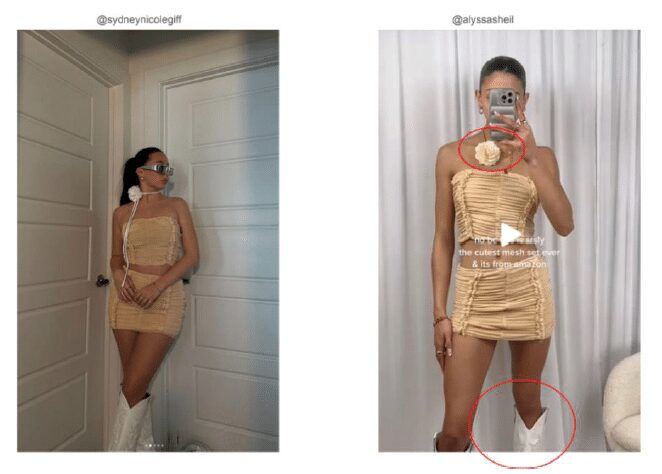
Impersonation of a creator’s identity can cause reputational and commercial harm. A copycat may use a similar name, profile image, slogan, or biography to contact followers, sell products, or solicit payments. One example is the case of the so-called “Sad Beige Lawsuit.” Sydney Nicole LLC filed a lawsuit against Alyssa Sheil LLC, claiming trade dress protection and copyright infringement over Alyssa’s use of a “neutral, beige, and cream aesthetic.” This case ultimately settled, leaving unanswered the question of whether the trade dress of a content creator is protectable.
However, if a content creator has a registered trademark, social media platforms will often remove direct infringers. This is one of the great benefits of trademark registration for content creators.
Upon discovering a potential infringer, the creator should preserve screenshots, URLs, dates, customer messages, and examples of confusion. The response may involve platform reporting, a demand letter, marketplace action, or domain procedures. The correct approach depends on ownership, priority, registration status, the similarity of the marks, actual confusion, and the nature of the conduct. A creator should avoid making public accusations before obtaining a proper legal assessment of the situation. The trademark monitoring guide explains why systematic monitoring after registration is essential for identifying new applications and uses before a copycat builds substantial goodwill.
Common Creator Trademark Mistakes
Creators often wait until a name becomes commercially significant before searching or filing. By that point, a competitor may have already filed a conflicting application or built substantial goodwill in a similar mark. Other common mistakes include:
- Assuming a social media handle, domain name, or LLC registration establishes trademark rights
- Filing only a logo when the wording is the most commercially important brand element
- Choosing a trademark class that does not match the actual business model
- Submitting a specimen that does not clearly show the mark in connection with the claimed goods or services
- Ignoring a USPTO office action until the deadline has passed
- Allowing brand elements to be used inconsistently across platforms, which weakens distinctiveness
- Failing to coordinate ownership between a personal filing and business entity operations
- Not reviewing agreements with managers, designers, or agencies for IP ownership provisions
The common trademark filing mistakes guide provides additional detail on errors that lead to rejection or loss of rights. Creators who have already filed through an online platform and received a refusal should contact a trademark attorney before the response deadline passes.
A Practical Creator Trademark Roadmap
A practical roadmap begins with an inventory of names, logos, slogans, programs, products, platforms, and revenue streams that matter commercially. The creator should rank those assets by business importance and identify the intended owner for each. The next step is a clearance search, followed by class selection, evidence gathering, and a filing plan.
After filing, the creator should calendar USPTO correspondence deadlines, preserve continuing use evidence, review new product and sponsorship plans against the registered goods and services, and monitor for conflicting applications. A creator expanding from content into merchandise, courses, or licensing should revisit the trademark portfolio rather than assume an original filing provides sufficient coverage for new activities.
Sharon Adams works directly with California content creators at every stage of brand growth. You can explore the firm’s services on the Adams Law Office trademark services page, visit the FAQ page for general trademark information, or schedule a free consultation to discuss your specific brand protection needs.
Frequently Asked Questions
Can an influencer trademark a social media handle?
A handle may function as a trademark if it identifies the source of specific goods or services and is used in commerce. Handling availability alone does not establish trademark rights, and a registration would need to identify the associated goods or services clearly.
Can I trademark my real name as a content creator?
Potentially. The analysis depends on how the name is used, the goods and services claimed, distinctiveness, and any applicable personal name or consent issues under Section 2(c) of the Lanham Act. A clearance search and consultation with a trademark attorney are important first steps.
Can I trademark a stage name?
A stage name may be protectable when it identifies entertainment, education, merchandise, or related services. It should be used consistently across commercial channels, and a clearance search and ownership review should occur before filing.
Does registering an LLC protect my creator name?
No. An LLC filing creates a business registration under state law but does not provide federal trademark rights. A federal trademark registration provides nationwide protection tied to specific goods and services, which an entity filing does not.
Does buying a domain give me trademark rights?
No. A domain name is an internet address. It may support evidence of use in some circumstances, but purchasing a domain does not establish trademark priority or nationwide trademark rights.
Which trademark classes should a content creator consider?
The answer depends on the creator’s actual business. Entertainment services, online education, clothing, cosmetics, software, and retail activities may involve different classes. A creator should discuss their full business model with a trademark attorney before selecting classes.
Can a creator trademark a catchphrase or signature saying?
A catchphrase may be protectable if it functions as a source identifier for specific goods or services. A phrase used only as ordinary speech, decoration, or audience interaction may not qualify. The phrase must be used consistently in a commercial context to build a case for registration.
What should I do if someone copies my creator name online?
Preserve evidence, including screenshots, URLs, dates, and examples of consumer confusion. Then seek a legal assessment before making public statements. Options may include platform reporting, a demand letter, domain procedures, USPTO opposition, or other legal action depending on the facts.
When should a California creator contact a trademark attorney?
A creator should consider consulting an attorney before announcing a major rebrand, selling merchandise for the first time, launching a course, s or responding to a USPTO office action or cease and desist letter. Contacting an attorney early is almost always less expensive than addressing a conflict after it has developed.
What is the difference between trademark protection for goods and services as a creator?
Goods are physical or digital products the creator sells, such as merchandise, skincare items, or downloadable content. Services are activities performed for customers, such as entertainment, education, or consulting. Different evidence of use is required for each, and filing in the wrong category can create gaps in protection.
Connect With Adams Law Office
For practical trademark education from Sharon Adams, connect on LinkedIn and subscribe to the Adams Law Office YouTube channel for video guidance on trademark strategy for creators and entrepreneurs.
This article is provided for general educational information only and does not create an attorney-client relationship or constitute legal advice. Trademark outcomes depend on the particular facts, evidence, timing, and applicable law.

“Disclaimer: This blog post is provided by Adams Law Office for educational and informational purposes only. It is intended to offer a general overview and understanding of trademark law and related topics, not specific legal advice. The content reflects the state of the law at the time it was written and may not reflect subsequent legal developments. This material should not be used as a substitute for professional legal counsel tailored to your individual situation. For personalized legal guidance, please consult a licensed attorney.”